A S Z É L E S S Á V Ú A K
Néhány gondolat a szélessávú hangszórókról.
Igen csupa nagy betűvel. Egy mára eltűnőben lévő gondolkodás eredményei. Szerencsére ma is gyártják őket. Lássuk milyen a napjaink hangszóró készítése. A csöves erősítők korában a hangszóróknak nagy impedanciával és nagy érzékenységgel kellett bírniuk. A legfőbb szempont a minőségi zenehallgatás volt. Minden ennek volt alárendelve. AZ olcsó de nagy teljesítményű, több száz wattos, tucat erősítők korában egy hangszórónak már érzékenynek sem kell lennie. Az erősítő kimenő teljesítménye szinte korlátlan. A telefonról visszajátszott mp3 zenék minősége mindegy, csak üvöltsön… Nincs elég magas hang? Tegyünk be két hangszórót hangváltóval, ha nincs elég mély tegyünk be még egy hangszórót. Nincs elég tér? Sebaj tegyünk be még két hangszórót körbe! Ez a mai megoldás.
Mennyire különbözik ettől az a hozzáállás, hogy oldalanként egyetlen , kiváló minőségű, érzékeny, szélessávú, tehát drága hangszóróval, minden plusz áramkör nélkül teremtsük újra a zenét otthon. Ha valamely tartomány hiányozna, akkor keressük meg az okát , ne pedig újabb hangszórókkal és hangváltókkal alkalmazzunk erőszakot a zeneiségen. A legtöbben itt hibáznak! A hangszóró mivel jó, a hibákat is jobban mutatja! Ezeket kell megszüntetni, nem a hangszórót hibáztatni! Ez fontos…

Ennyi eszmei körüljárás után lássunk egy konkrét megvalósítást.
Én a DBR (dupla basszreflex) megoldás mellett döntöttem. A méreteket pontosan közli a gyártó! Egy helyi asztalos mester elkészítette nekem a dobozt A neve Kresz Béla (Bóly). Én pedig festés után beépítettem a hangszórókat minden áramkör nélkül! És most lép a körbe a csöves erősítő! Itt ugyanis a konkrét példa, hogy a csöves erősítő miben jobb. Ez a fajta hangfalmegoldás ugyanis a hangszóró sajátossága miatt a középtartományt úgy 2800Hz-nél kiemeli. Ez tranzisztoros erősítőnél kiabáló emiatt zavaró is ezért a gyártó áramköri javaslattal is él ahol a frekvenciamenet lineárisabb lesz. A csövesnél is kiemelődik de itt nem zavaró! Így a jel útjában lévő áramkörre sincs szükség. Ez bizony komoly fegyvertény. Egyszerűen egymásnak lettek teremtve!
A hangfal elkészült. A hangja minden várakozásom felülmúlja! Végre hallhatom direkten minden sallang nélkül az erősítőmet! A Fostex ezen hangszórójának a bejáratási ideje 200 óra a gyártó szerint és a bejegyzés írásakor még csak kb 10 óra van a hangszórókban, tehát csak a torkát köszörüli mégis hihetetlen jó! Teli élettel, energiával! Egy audiofile állat!

Ennek a megépítését minden csöves erősítőhöz kimondottan ajánlom. Ne keresgélj tovább!
A megépítéshez pontos leírás is van a világhálón:
Íme egy példa:
Flea power valve amps
Those who know me know that I love my flea power single-ended (SE) valve amplifiers. The three valve amps that are in my current rotation are The Silver Dragon – 300B SET, Luciano – 807 SE UL and Paris – SE 6EM7 fully integrated amp. The power output from these amps ranges from 2.5W to 5.8W. With so little available power it is easy to understand why high-sensitivity loudspeakers are required. I have had a pair of Fostex single driver back-loaded horns for a few years now. The horn speakers use the Fostex FE206En (8″) fullrange driver. The FE206En driver has a rated sensitivity of 96dB/1W/1m. The back loaded horn speakers are large and (according to my wife) ugly speakers. But when it comes to flea power amps they can make “boogie” real loud.
A family friend had built me the back-loaded horn speaker cabinets and at the same time a pair double bass-reflex boxes also for the Fostex FE206En driver. The horn speakers I kept for myself but the double bass-reflex speakers went to my son’s house along with a two-stage KT88 SE UL amp that I built. Kit, my son, had the FE206En double bass-reflex speakers in the corner of the room on a wood floor. The bass from these speakers was always very impressive. So much so that I had to have a pair for myself.

Photograph 1: First pair Fostex FE206En Double Bass Reflex Speakers
Double Bass-Reflex Type Speaker Enclosures
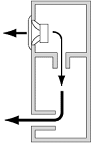 The double bass-reflex (DBR) speaker system is a variation of the standard bass-reflex (BR) enclosure that is intended to achieve further extension of the bass response. The augmentation to the bass output is achieved by the use an additional chamber in the bass-reflex process. Other advantages of the double bass-reflex speaker compared to a conventional bass-reflex system are a reduction of the cone excursion around F3 and a corresponding reduction distortion. The use of an additional chamber in the speaker enclosure also reduces the likelihood of resonances.
The interior chambers of the double bass-reflex speaker box is typically lined with a thick damping material and/or stuffed with loose synthetic or wool fill. The fill material is used to dampen the rear wave from the driver and minimize standing waves and reflections within the speaker enclosure.
Fostex FE206En Double Bass-Reflex Speaker Box Plan
The double bass-reflex speaker enclosure plan is from the datasheet that was included with the Fostex FE206En driver. Figure 1 below shows the speaker box plan from the datasheet.

Figure 1: Fostex FE206En Double Bass-Reflex Enclosure Plan
Fostex FE206En Fullrange Speaker Drivers
The photos below show the Fostex FE206En fullrange speaker drivers. I have added bituminous aluminium foil to dampen the driver frame. The extremely large magnet of the driver is also covered with bitumanized heavy aluminium foil to reduce sound reflections from the back of the box. There are many tweaks and modifications that can be done to improve the drivers. For more ideas, see the Fostex FE206E / FE206En Fullrange Driver Modifications and Tweaks page.

Photograph 2: Fostex FE206En Fullrange Speaker Drivers

Photograph 3: Damping the Frame of Fostex FE206En Fullrange Drivers
More than one skill
Anyone who has tried a DIY audio project knows that you generally need to know more than how to just read a schematic and use a soldering iron. The skills required can vary from simple drilling holes to complex carpentry. When it comes to carpentry I leave that to those who are better skilled than I. But I don’t shy from timber or metal enclosure preparation and finishing.

Photograph 4: Unfinished Fostex FE206En Double Bass-Reflex Speakers Cabinets
Luckily when the double bass-reflex speaker boxes arrived they had already been sanded down and that meant I only had to finish the surface preparation with a pass of fine sand paper before applying a coat of primer. I wanted a dull stipple finish so reflections from the big screen TV from the sides of the speaker boxes would be minimized. To achieve this I used a cheap paint-roller and after going once around the box with a white undercoating paint, I went around three more times with a semi-dry roller to really tease-up that stipple finish. This process worked out very well.
After two hours of drying time I applied the top coat to the speaker boxes. This was a satin finish in black. Not quite black more of a dark charcoal. Once more I went back over each surface three or more times using a semi-dry roller. The stipple finish, which had started with the undercoat, was now built on with the top coat. That was the finished I had envisaged, dull and heavily stippled.

Photograph 5: Painted Fostex FE206En Double Bass Reflex Speakers Cabinets
Assembly – Fostex FE206En Double Bass-Reflex Speakers
The top chamber of the double bass-reflex speaker boxes is lined (but not stuffed) with Dacron poly fill. The bottom chamber of the speakers remains empty.

Photograph 6: Speaker Damping Materials FE206En Double Bass-Reflex Speakers Cabinets
Gold plated binding posts are used to connect the speakers at the back. Two strands of wire wrap wire (fine 30 AWG silver plated copper wire) is use for both positive and negative of the speakers. A special pair of single strand wire wrap wire speaker leads was made for the speakers knowing the amp of 2.5W would require no heavier wire.

Photograph 7: Wire Wrap Wire and Speaker Binding Posts
In the final assembly steps, most of the slack from the connecting wire (double strains of lightly twisted wire wrap wire) was removed and the drive screwed securely onto the boxes with supplied gasket. The fine metal grills are held on with four rare earth button magnets and are easy to pop on and off.
Photograph 8: Fostex FE206En Double Bass Reflex Speakers
